
How to recognise a good security door?
Security doors are almost standard in the fittings of a house. Every year new technologies appear on the market that provide ever better protection against break-ins. Although there are no safeguards that cannot be forced, the longer a break-in attempt lasts, the greater the chances of detecting and thwarting it. If you want to buy a security door and are wondering what you should pay attention to, read our post.
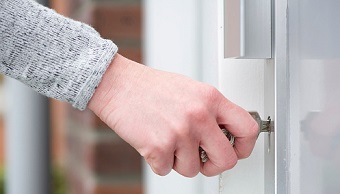
How are security doors classified?
Every security door is assigned one of 6 classes of resistance to break-in (RC – Resistance Class). The higher the RC class, the harder it is to break the door’s resistance. Doors RC1N and RC1 are the easiest to overcome and protect only against a break-in using physical force. A door of class 2 also cannot be opened using simple tools. In fact classes 1 and 2 concern so-called doors with enhanced resistance to break-in, while doors of classes 3 and 4 are described as security doors. The last two classes (5 and 6) concern doors used e.g. in banks.
Features of a good security door
Solid security doors are reinforced with bars, plates and bolts, which prevent openings being cut in their surface and prevent them being levered out. Security cylinders of class C and security escutcheons also protect against break-ins. The hinges are protected against being cut with special covers.
When buying a chosen model it is essential to check whether it has at least two locks (preferably certified to class C) bolting the door in at least 3 places. Best of all, of course, is to choose a door with multipoint locks. The more safeguards, the better. If the choice falls on a glazed door, it must be armoured glass.
There is no hiding the fact that security doors are more expensive than doors without safeguards, which is why it is worth investing in ones that are durable and hard-wearing. The metal elements of the door should therefore be made of stainless steel, and the timber covered with protective coatings preventing the penetration of moisture. Classic doors of solid timber are not security doors, but their level of security can be raised to the maximum by using security elements, thereby preserving the natural beauty of the door joinery, without limitations and unsightly metal infills.