
How do timber windows differ from plastic ones?
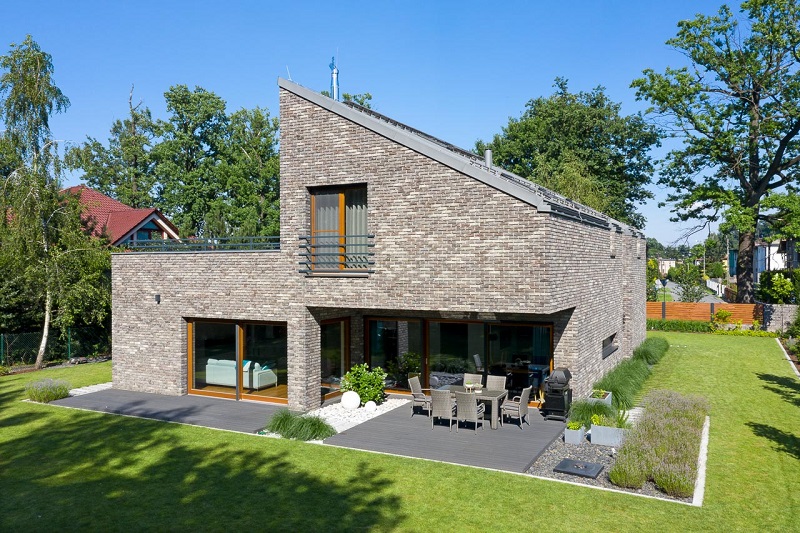
Over a long horizon, spending money on timber windows is more economical than buying plastic windows. Despite the higher outlay at the start, we save over time. They can be painted, damage can be repaired, some hardware components can be changed, you can even change their colour. Plastic windows, if damaged, cannot be repaired. The same applies to their deformation.
Timber offers greater structural possibilities than plastic, because it is a more rigid material.
ECOLOGY COMFORT WARMTH ELEGANCE
Even when timber windows are replaced with others, they do not constitute waste that is harmful or troublesome.
Timber windows are characterised by a pleasing appearance. Their grain and beautiful colouring mean that every interior looks natural and elegant in their company. At the same time the physical properties of timber – that is its temperature – mean that interiors with timber windows are warmer. Objects with cold surfaces (plastic, metal) are perceived as cool.
Timber regulates the humidity of the air. It is a material capable of absorbing excess moisture and, at the moment when the air is dry, of giving back the moisture it has accumulated.
BY MANUFACTURING TIMBER WINDOWS WE SAVE ENERGY
Timber for making windows requires no additional products, and therefore the energy needed to obtain timber is decidedly lower than that needed to produce the semi-finished materials for making plastic windows. Making a timber window uses 1⁄11 of the total energy needed to make a plastic window. The by-products of felling trees and processing them are fully used to make chipboard, cork, paper and so on. They generate no harmful waste.
TIMBER WINDOWS REDUCE CO2 EMISSIONS
In the process of disposal, timber emits only as much CO2 as it accumulated in the process of growth. Their disposal does not burden the atmosphere.
TIMBER WINDOWS OFFER MANY STRUCTURAL POSSIBILITIES
Timber, unlike plastic, offers** many structural possibilities**. Making large glazed areas is not possible in plastic, because it is a structurally unstable material. In historic buildings there is frequently a need to recreate existing elements, which in the case of timber is feasible, whereas in plastic it is practically impossible. Every element can be recreated.
SAFETY
Timber windows emit no harmful substances during use, and the same applies to a situation in which a building were to catch fire. Window square timber burns slowly and emits no harmful substances during the slow process of burning, unlike plastic.