
Classification of windows by hardware
Hardware is an integral part of a window, because it is with it that windows are opened, closed and tilted. Not all hardware is the same, as it is matched to the type of window and the level of protection it is to provide. In today’s post we explain what hardware is found in the individual types of window and what distinguishes the hardware in timber windows.
What is window hardware?
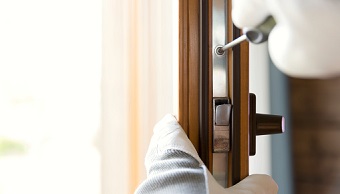
Hardware is nothing other than the handles, locks, hinges and security systems fitted in the window frame. They determine the mechanism by which the casement will open, and they also influence the airtightness of the window. Windows fitted with additional safeguards are harder to lever open. In modern timber windows the hardware can even be invisible (this is so-called concealed hardware), as it is fitted between the sash and the frame, thanks to which there is no need to worry about choosing the right covers.
Types of window and their hardware
In vertical timber windows and patio doors weighing up to 150 kilograms, perimeter hardware is fitted, which serves to turn and/or tilt the window. This is the most popular and versatile kind of hardware. It is arranged around the perimeter of the sash. Among the hardware of balcony windows there are turn fittings allowing the window to be opened wide and tilt and turn windows with the option of additional tilting. In timber windows with tilt and turn technology a mis-operation block and a central gear are fitted, thanks to which opening the sashes becomes much easier. What is more, the micro-ventilation present in the windows allows the position of the sash to be changed easily using just one handle.
Timber terrace windows have tilt and slide hardware in PSK or HSK systems. Thanks to this solution it is possible both to tilt the sash, e.g. in order to air the home, and to slide the sash, which by passing in front of the other sash takes up no additional space in the room. In the case of very large and heavy terrace sashes, HS lift and slide systems are used.
Threshold-free timber windows are made with hardware of the PSK and HS type. The sash moves along a track hidden in the floor and passes in front of the fixed part of the window. Threshold-free glazing is used in balcony windows.
Functional hardware in timber windows
Many modern kinds of hardware are fitted in timber windows. One of them is security hardware, available in three classes:
- hardware of class RC1 – it includes corners with enhanced resistance to break-in, steel security striker plates and a lockable handle with a key;
- hardware of class RC2 – it comprises steel anti-lift striker plates having from 7 to 11 security points, corners and gears with mushroom cams made of stainless steel, a handle with a key and an anti-drill insert covering the fixing;
- hardware of class RC3 – it has at least 16 security points, a self-latching mechanism and a counter-rotating central lock blocking the possibility of sliding the window sash.
All these elements are meant to make it harder for a burglar to remove the handle and take the pane out of the frame. In alarm systems for timber doors a so-called magnetic contact, that is an opening sensor, is also used. Its advantage over ordinary motion sensors is that it gives notice of the very attempt to force a building, and not merely of the presence of burglars inside the house.